Hunting near Island Park: the general picture
Idaho is a serious hunting state. The area around Island Park covers Idaho Department of Fish & Game hunting units 60, 60A, 61, 62, and 62A, in the Upper Snake Region. Geographic boundaries include Leigh Creek Road on the Idaho-Wyoming state line, north along the state line to the Yellowstone Park boundary, and the Henry’s Fork corridor through Ashton, St. Anthony, and Island Park.
Available game: elk, mule deer, white-tailed deer, pronghorn antelope, moose, black bear, mountain lion, and various waterfowl and upland birds. Tag and season structure varies by species — some tags are over-the-counter, some are issued only through controlled-hunt draws.
This guide gives you the general picture: what to hunt where, when seasons run, and how the draw and tag process works. Specific honey holes are not published. For specific unit boundaries, current season dates, harvest data, and the Hunt Planner tool, go directly to idfg.idaho.gov.
What's hunted, and when
Elk
Units 60, 60A, 61, 62, 62A make up the Island Park Elk Zone. General-season elk tags can be purchased over-the-counter, though specific season dates and weapon types (archery vs. rifle vs. muzzleloader) vary. The trophy hunts are controlled-hunt only. Archery season generally opens late August, rifle seasons run mid-October through mid-November.
Mule deer
Mule deer general tags are available over the counter for most weapons. Specific season dates vary by unit. The general rifle season is typically a roughly two-week window in early-to-mid October.
White-tailed deer
Whitetail are less common but present in the lower elevations and river bottoms. Tagged under the same general deer tag in most units.
Pronghorn antelope
All antelope hunts are controlled-hunt only. Apply in the spring draw (deadline historically in May/June; the 2026 draw is expected to follow the pattern). Season runs August through October depending on the controlled hunt drawn.
Black bear
General-season black bear tag, available over the counter for most hunters. Both spring (April–June) and fall (September–October) seasons. Bait and hounds are allowed under specific permits and rules.
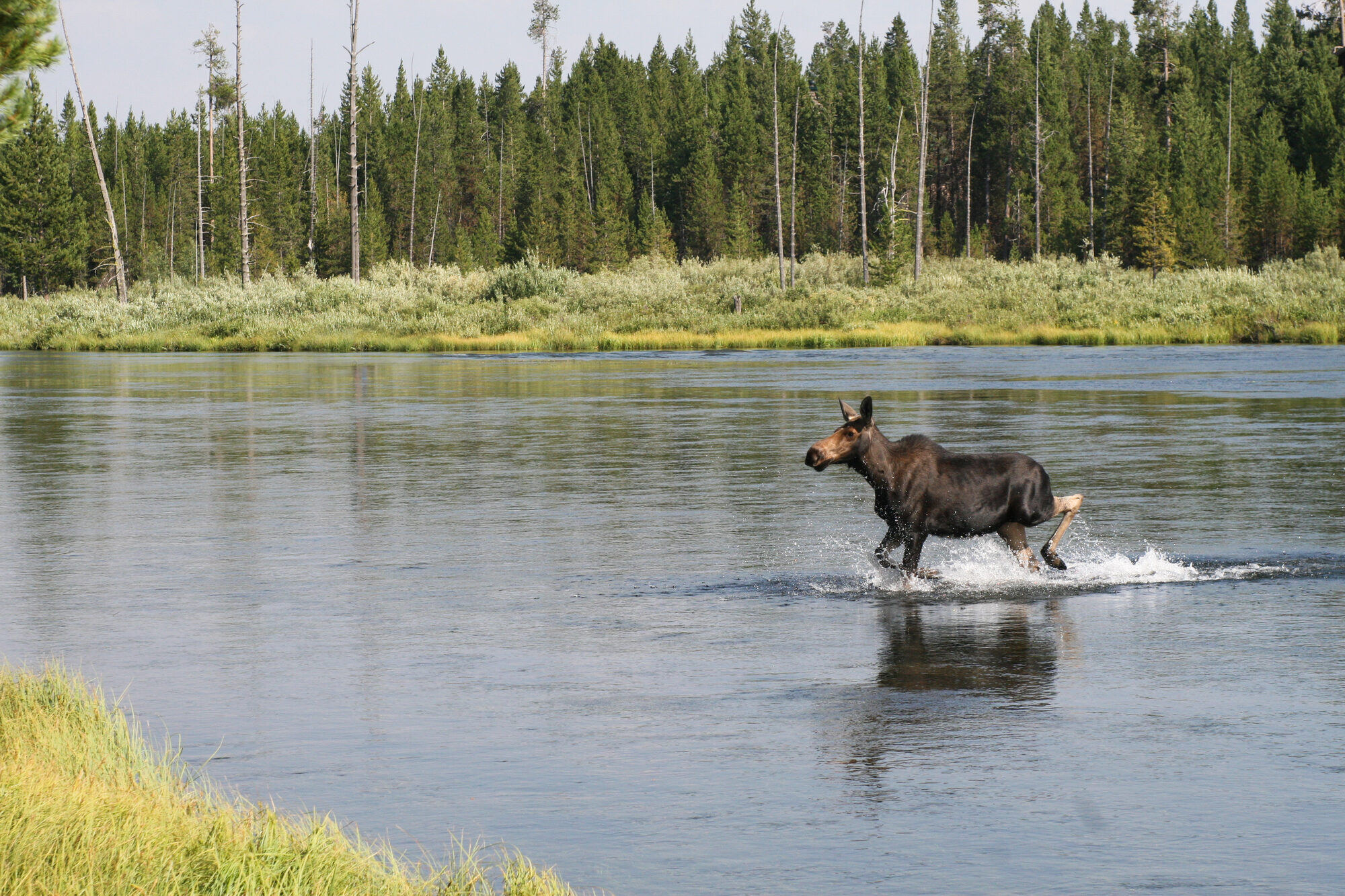
Moose, mountain lion
Controlled-hunt only. Moose tags are extremely limited; lion tags are more common but specific to season.
Waterfowl and upland birds
Ducks, geese, ruffed and dusky grouse, sage grouse (controlled-hunt only), pheasant. Standard federal duck stamp requirements apply for waterfowl.
The tag and draw process
Over-the-counter (OTC) tags
General-season elk, mule deer, and black bear tags can be purchased anytime through the season as long as the quota for nonresident tags hasn’t sold out. Nonresident OTC tags do sell out for premium units — buy early in the season if you’re traveling.
Controlled hunts (draw-only)
All pronghorn antelope, all moose, all mountain lion, and many trophy elk and deer hunts are controlled-hunt only. You apply in the spring draw. Application deadline historically falls in early June. Draw results are posted in mid-to-late June. Successful applicants receive an authorization to purchase the tag.
For 2026, the antelope/elk/deer controlled hunt application opened in spring; check idfg.idaho.gov/hunt/controlled for current deadlines.
Nonresident tags
Nonresident hunters face higher tag fees and a quota system. Reservations for the most popular controlled hunts can require multiple years of application before drawing.
Hunter education
Idaho requires hunter education for first-time hunters born after January 1, 1975. Out-of-state hunter education certifications are accepted.
Practical hunting in the area
Access
Most hunting happens on public land in the Caribou-Targhee National Forest, on USFS roads and trails. Some private-land hunting is available through the Idaho Access Yes! program, which pays landowners to allow public hunting access. Access Yes! map.
Public vs. private boundaries
Boundaries between Forest Service, BLM, state, and private land are not always signed. The OnX Hunt app or the BLM/USFS landownership layers on the Avenza Maps app are the standard tools for staying on public land. Trespass on private land is a serious enforcement issue in Idaho.
Outfitters and guides
Idaho requires nonresident hunters in some controlled hunts to use a licensed outfitter. For first-time visitors to a unit, a licensed local outfitter is the right answer: they know the country, they handle the tag application, they know where the elk move with the season. The Idaho Outfitters & Guides Licensing Board lists licensed outfitters at oglb.idaho.gov.
Tag/regulation reminders
- Idaho fishing license does NOT include hunting privileges. Separate hunting license required.
- Federal duck stamp required for waterfowl (in addition to Idaho license).
- Yellowstone National Park: no hunting permitted, ever.
- Specific drainages and seasons within the Island Park units have unique rules — check the current rule book for the exact unit you’re hunting.
When seasons actually run
Approximate seasons (verify current dates on the Hunt Planner before applying):
Spring
- Spring black bear: mid-April through late June
- Wild turkey: mid-April through May
Summer
- Sage grouse (controlled hunt only): early September
- Archery elk and deer: opens late August through late September
Fall
- Pronghorn antelope (controlled hunt): August through October
- Rifle elk: mid-October through mid-November
- Rifle deer: early-to-mid October (general); controlled hunts run different windows
- Muzzleloader: typically a separate two-week window in November
- Fall black bear: September through October
- Upland birds (grouse, pheasant): September through early November
- Waterfowl: October through January (federal flyway dates)
Winter
- Mountain lion: November through March (general), longer in some controlled hunts
Questions, answered
Can I buy an elk tag the day I arrive?
Sometimes. General-season nonresident elk tags can sell out before the season starts in popular units. Buy in advance if you’re traveling from out of state.
Do I need a guide as a nonresident?
Not always. Some controlled hunts on wilderness units require an outfitter. For general-season hunts in Units 60–62, you can hunt on your own with proper tags. For first-time visitors who want a successful hunt, an outfitter dramatically improves odds.
What about hunting in Yellowstone?
Yellowstone is closed to all hunting, year-round. Hunting is also prohibited in the Henry's Lake State Park and Harriman State Park boundaries.
Where do I get the controlled-hunt application?
Apply online through idfg.idaho.gov/hunt/controlled or at any IDFG license vendor. Application fees apply; tag fees are charged only if drawn.
What gear do I need?
Beyond standard hunting gear: bear spray (grizzly habitat through the entire area), GPS or smartphone with offline maps, and the OnX/Avenza land-ownership layer. Idaho weather in the fall can swing from 60°F days to single-digit nights — layered clothing is essential.