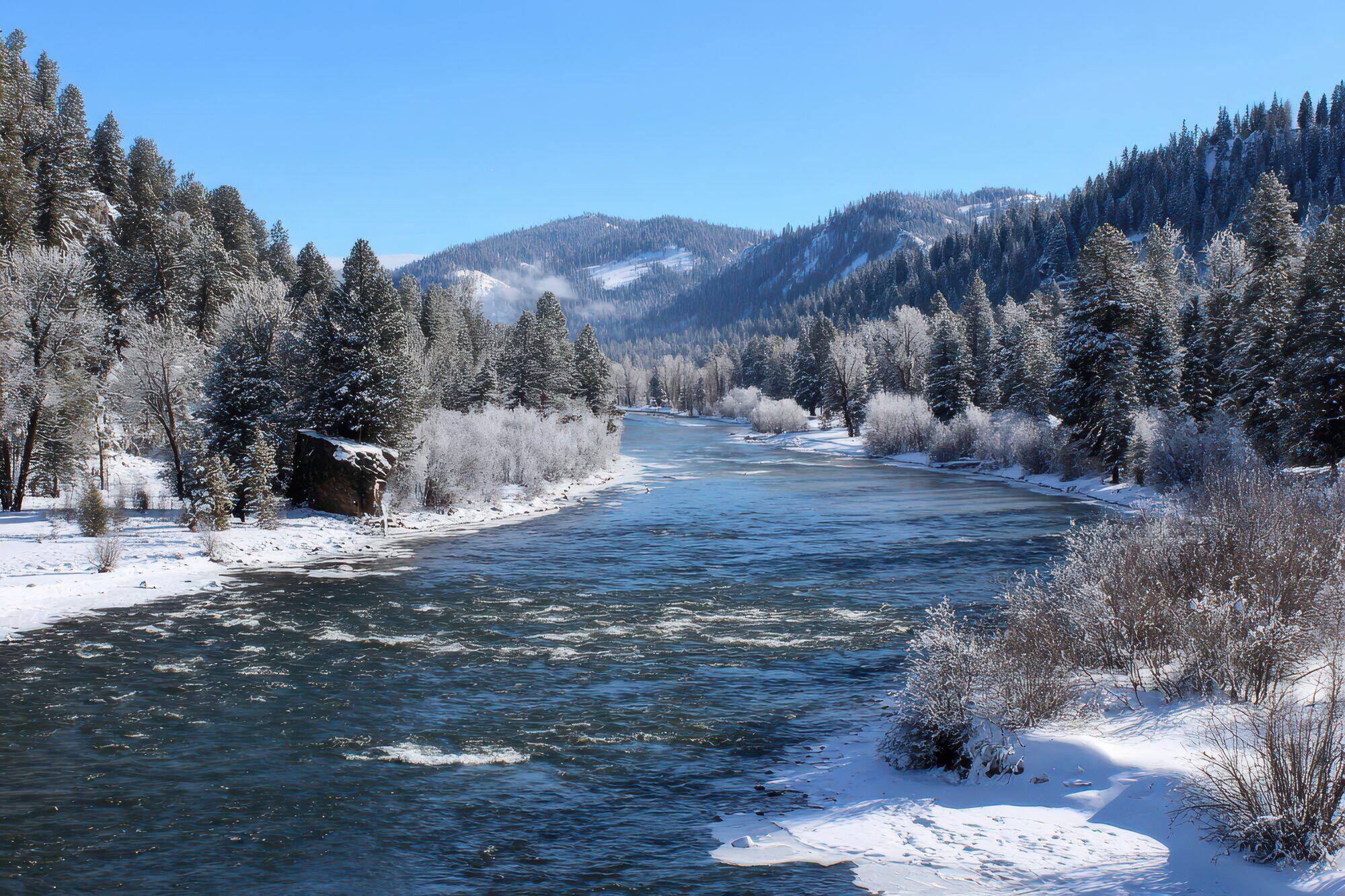
Why winter in Island Park is its own trip
Winter is the season Island Park was built for. The town’s identity as one of the snowmobile capitals of North America comes from the combination of reliable lake-effect-style snow, 500+ miles of groomed trails, and access to West Yellowstone’s wider system. From December through March, this is what people come here for.
It is also serious winter. Sub-zero nights are common. Storms can close roads. The mountains are dangerous off the groomed trail. Visitors who come prepared have the kind of trip that becomes a yearly tradition. Visitors who don’t can have a miserable week.
Month by month
December
The build-up. Snow accumulates through the month. Snowmobile trails begin grooming once the base reaches ~12 inches — varies by year. Most rental operators open mid-December.
Yellowstone’s west entrance reopens for oversnow vehicles around December 15 (verify current year). Christmas week books out 6–9 months ahead.
January
Mid-winter. Best snow base of the year. Coldest temperatures (sub-zero stretches routine). Snow ghosts at Two Top fully developed. Snowmobile trail conditions at their peak.
February
Generally the most reliable month for big snowmobile trips. Conditions are still excellent, days are getting longer, sub-zero stretches are slightly less common than January.
March
Spring riding. Days are warm enough that mid-day conditions get slushy at lower elevations but higher trails remain excellent. Last reliable month for groomed trails.
Early April
Transition. Snowpack still substantial at elevation but melting fast lower down. Yellowstone’s wheeled-vehicle season opens around the third Friday of April.
What to do
Snowmobiling
The main event. 500+ miles of groomed trails out of Island Park. The Two Top loop from West Yellowstone (30 miles, snow ghosts, 360° summit views) is the canonical day ride. Multi-day expeditions on the Continental Divide Snowmobile Trail. Rentals: see the snowmobiling pillar guide.
Cross-country skiing
Harriman State Park has 33+ miles of groomed Nordic trails — among the best Nordic systems in Idaho. Daily Idaho State Parks entry fee. Equipment rental in West Yellowstone.
Snowshoeing
Buffalo River loop, Mesa Falls boardwalk (limited winter access), and many Caribou-Targhee NF trails are excellent for snowshoers. Quieter than snowmobile country.
Yellowstone in winter (snowcoach or guided snowmobile)
Wheeled vehicles are out December 15 to March 15 (approximately). The way in is by guided snowmobile (commercial tour or NCGSAP permit) or by snowcoach — tracked vehicles operated by NPS-approved concessionaires. The geyser basins in winter are profoundly different from summer — steam clouds, snow-covered terraces, far fewer visitors. Bison, elk, and wolves are at lower elevations and easier to spot.
Ice fishing
Henry’s Lake and Henry’s Lake State Park host an active ice-fishing community. Cutthroat-rainbow hybrids and brook trout. Local shops rent gear and offer guided trips. Check ice safety before going out — conditions vary day to day.
Practical notes
Pack for the cold
This is the section to re-read in the packing list guide. Layered base + mid + insulated outer is non-negotiable. Insulated waterproof boots rated below 0°F. Liner gloves under insulated mittens. Balaclava for face protection on snowmobile.
Block heater
If temperatures drop below -10°F, plug your vehicle into a block heater overnight. Most cabins have outdoor outlets for this. Without one, you may have starting problems in the morning.
Avalanche awareness
The Centennial Range has produced multiple fatal slides in recent winters. Any riding above the groomed trail system requires avalanche education, beacon/probe/shovel, and ideally a guide. Current conditions: Centennial avalanche forecast.
Cell coverage
Worse in winter than other seasons (storms knock out coverage). Carry offline maps and consider a satellite communicator (Garmin inReach or similar) for multi-day backcountry trips.
Lodging
Most Grandview cabins are explicitly designed for winter trips — trailer-friendly parking, ground-floor mudrooms for wet gear, hot tubs. Holiday weeks (Christmas, New Year, MLK weekend, Presidents' Day) book 9–12 months ahead.
A realistic winter day in Island Park
Below is what an average snowmobile day in Island Park looks like in January, from inside the cabin to the end of the ride. The point: budget realistic time for the cold-management steps that get skipped in summer trip planning.
Morning (7:30–10:00 AM)
Coffee inside. The cabin will be warm; the outside in single-digit temperatures. Start the truck’s block heater 30 minutes before you leave if the overnight low was below 0°F. Eat a real breakfast — you’ll burn calories fast in the cold.
Dress in stages. Base layer first inside, mid layer once you’re close to leaving, outer layer at the door. Putting on snowmobile bibs in a warm cabin and then sitting waiting to leave produces sweat that turns cold on the trail.
Pre-ride checks
- Fuel: top off at the Sinclair on Sawtelle Peak Road before heading to the trailhead. Cold weather reduces effective range.
- Goggles: bring a spare pair. Fogging and icing are constant.
- Hand warmers: open and activate before you leave the cabin (they need oxygen and 5–10 minutes to warm up).
- Communication: if your group is riding the backcountry, confirm everyone has a satellite communicator on or radios paired.
On the trail (10:30 AM–3:00 PM)
Pace matters. The temptation in deep snow is to ride hard, but in single-digit temperatures the wind chill at speed is brutal. Most groups warm up at the Big Springs warming hut (Forest Service, holds 200 people, wood stove). Trail food is high-calorie, easy to eat with gloves on — nut bars, jerky, hot drinks in a thermos. Avoid alcohol on the trail.
If you feel any extremity going numb, stop and warm it. Frostbite is silent — you don’t feel the damage until thawing.
Afternoon (3:00 PM)
Sun starts dropping early in January. By 3 PM the trails are in deep shadow and temperatures fall fast. Most multi-hour rides plan to be back to the cabin or the parking area by 3:30 PM. Riding after dark is dramatically colder and the trails are less visible.
End of day
Hot tub or hot shower as soon as you’re inside. Dry gear out completely — wet base layers don’t recover in a single overnight. Most Grandview cabins have boot dryers or designed-in drying space; use them.