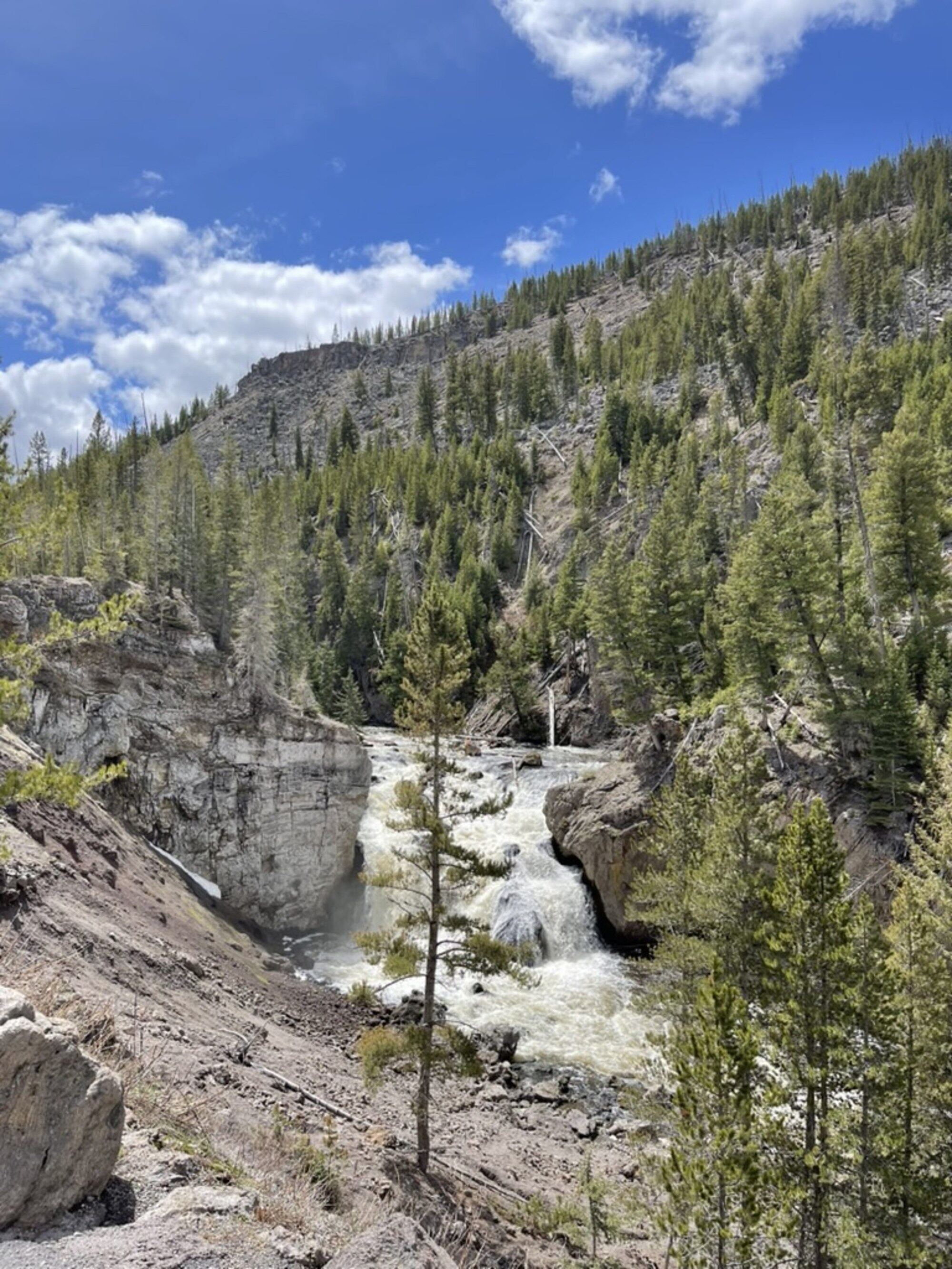
What this country gives photographers
Island Park sits at 6,300+ feet of elevation in a caldera ringed by mountains, threaded by a famous river, twenty-nine miles from one of the most photogenic national parks in the world. The light at this altitude is excellent — clean, hard-edged, with long golden hours in summer and dramatic winter clarity. Wildlife, water, geyser country, and historic structures are all within an hour’s drive.
The shots below are organized by location and the time of day each one works best.
The ten most photographed spots
1. Upper Mesa Falls (Caribou-Targhee NF)
The 114-foot waterfall with viewing platforms at the brink. Best in mid-morning when sun reaches the falls face. Cloud cover softens the shot. Rainbow in the spray on bright days. Tripod helpful for slow-shutter water effects.
2. Big Springs (Caribou-Targhee NF)
120 million gallons of water emerging from the ground, with enormous trout visible in the clear water from the bridge. Best at midday for the underwater fish; best at sunrise for the spring source itself. Polarized filter essential for the trout shots.
3. Henry's Lake at sunset
The lake’s long axis runs roughly east-west, so the entire surface catches the setting sun. Multiple public access points along the south shore. Late June through August is the most productive window — afternoon storms produce dramatic skies.
4. Sawtelle Peak summit (9,866 ft)
360-degree view of the Tetons, the Centennials, Lionhead, and the Yellowstone Plateau. The radar dome at the top is federal — stay back. Best at sunrise (Teton side lit) or sunset (the western Centennials and the Snake plain glow). 13-mile gravel road from US-20 to the summit.
5. Harriman State Park / Railroad Ranch buildings
Restored historic ranch buildings from the early 1900s. Sandhill cranes and trumpeter swans in the meadows. Best in late afternoon when the long shadows from the cottonwoods stretch across the open meadow. Rangers offer summer interpretive tours.
6. Mesa Falls Scenic Byway pullouts (Idaho 47)
Multiple pullouts looking into the Henry’s Fork canyon between Island Park and Ashton. The Bear Gulch overlook is the canonical one. Fall foliage in late September through early October. Aspen turn gold.
7. Inside Yellowstone — Grand Prismatic Spring overlook
From the Fairy Falls trail overlook (half-mile uphill walk), not from the boardwalk. The aerial view captures the full color spectrum — the boardwalk-level view doesn’t. Best when the air is calm and steam isn’t obscuring color.
8. Inside Yellowstone — Old Faithful at sunset
The geyser erupts roughly every 90 minutes. Wait for an eruption that coincides with low-angle light from the west. Position yourself with the sun behind your shoulder. The plume catches gold for about three minutes.
9. Wildlife in Madison Junction valley
The meadows below Madison Junction routinely hold bison and elk at dawn. Best photographed from inside or beside the vehicle, with a long telephoto (300mm+). NPS rule: 25 yards minimum from bison, 100 yards from bears.
10. Aerial / drone shots over the caldera
Important: drone flights are NOT permitted inside Yellowstone or Grand Teton National Park, or in most Wilderness areas. Drone flights ARE permitted on most Caribou-Targhee NF lands with FAA Part 107 compliance. Check current Forest Service rules before flying.
Time of day and season
Golden hour
The first 90 minutes after sunrise and the last 90 minutes before sunset. Worth setting an alarm for. At Island Park’s latitude (44°N), summer sunrise is around 5:45 AM and sunset is around 9:00 PM.
Blue hour
The 30 minutes before sunrise and after sunset, when the sky still has color but no direct sun. The hot springs, lakes, and snowy peaks photograph differently in this light.
Seasonal sweet spots
- June: Wildflowers, calves visible in Yellowstone valleys, longest daylight
- September–October: Aspen gold, elk rut, fewer crowds, dramatic afternoon storms
- January–February: Snow ghosts on Two Top, steam in the geyser basins, snow-covered Tetons
Avoid for photography
- 10 AM – 3 PM in summer (harsh overhead light, peak crowds)
- Late October – early November (in-between season, no snow, no autumn color)
- Hazy days during western wildfire smoke events (check air quality before driving up)